
Finding Thinking Styles
In Finding Thinking Styles, you’ll learn a reliable, repeatable process for grouping people by how they think, not by shallow demographics, behaviors, or statistics. You’ll learn how to discover the thinking styles that exist within the boundaries of goals that your organization helps people accomplish.
Every role is welcome to this course: makers, thinkers, understanders, clarifiers. You will need the skills of collaborative teamwork and dwelling in details.
Required
before you take this course:
Self-paced Course Listening Deeply
-or- Book Time to Listen (Ch. 2, 3, 4, 6)
see if you are ready

Self-paced course

Closed captions

Last updated July 2026

Join Indi’s Slack community

6 month access
About the course
Indi Young, creator of Data Science that Listens, teaches reliable methods for guiding product strategy based on a nuanced understanding of the people you support (or wish to support). This is the strategic gateway into truly human products, services, and policies.
The biggest paradigm-shift is that you work within a goal/purpose that people share, instead of trying to describe people universally across a market population. This shift gives you deeply actionable understanding that leads teams to opportunities no one else is seeing.
This course follows an in-depth example that explores all the angles. Eliminate the guesswork and leave your assumptions at the door.
Sneak preview as video shorts about the danger of demographics.
Check out examples and uses of Thinking Styles.
Course Sections:
Section 1 – Why Thinking Styles
1.1 Think Bigger
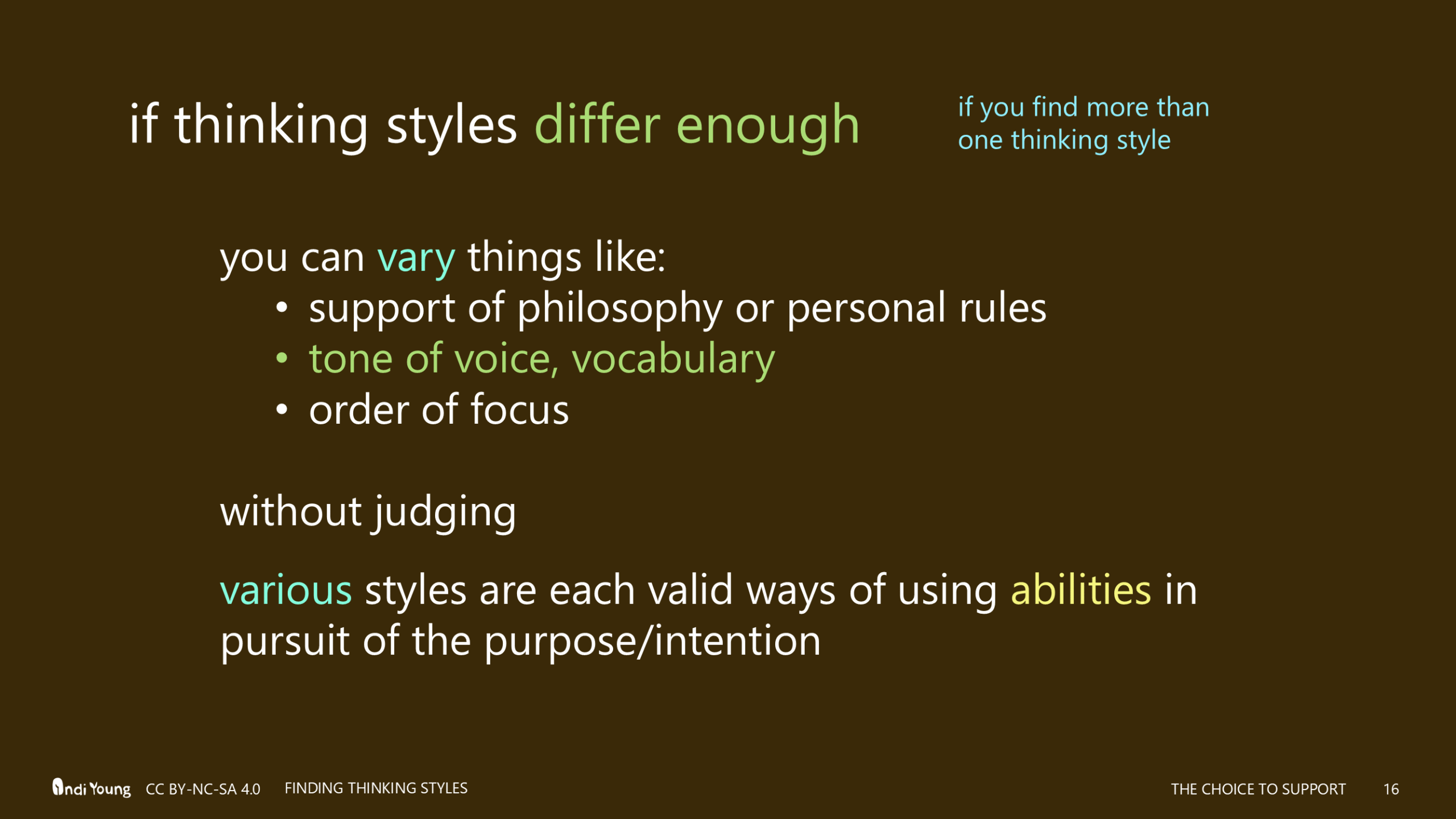
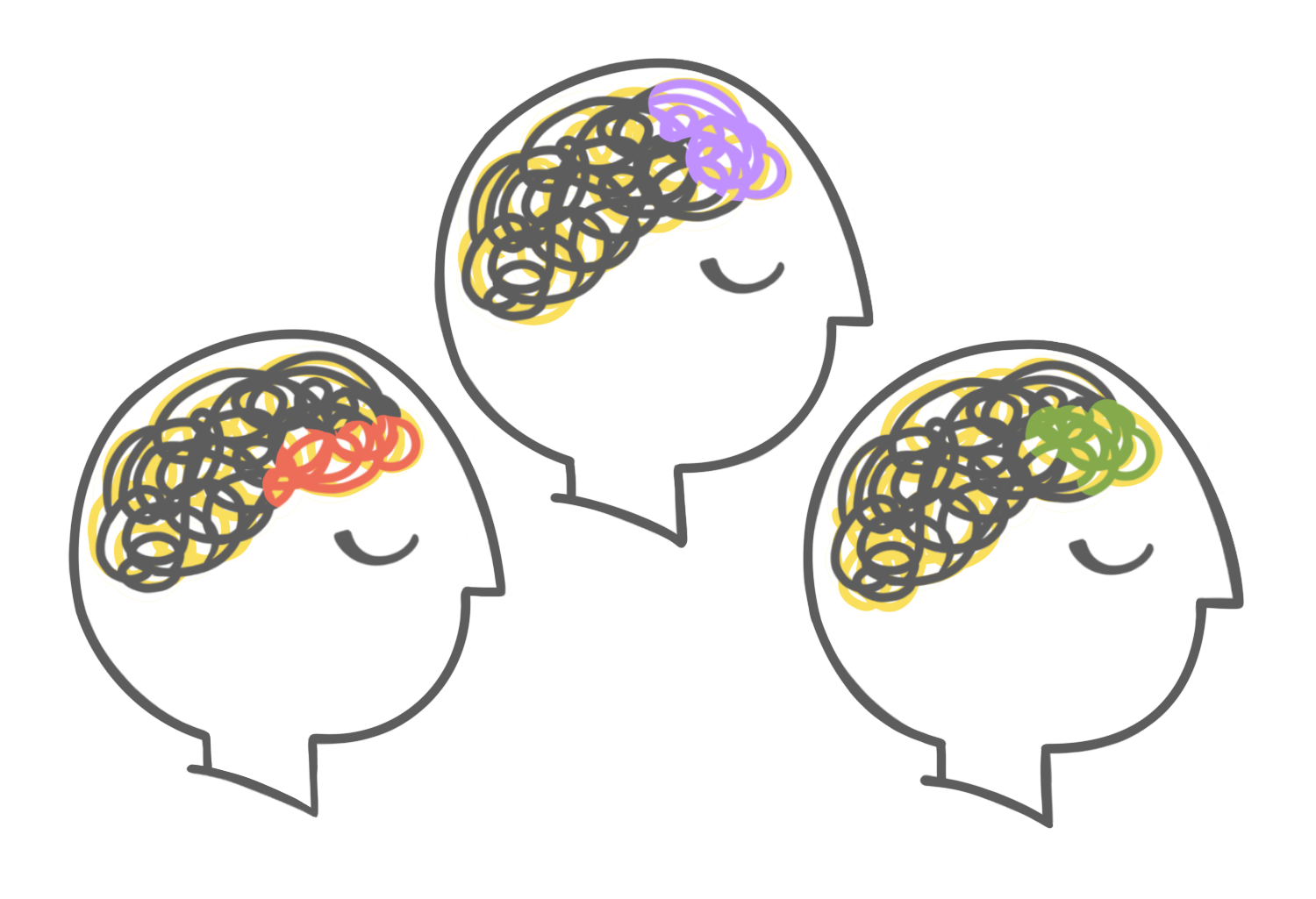
1.2 Define Thinking Styles
1.3 The Choice to Support
1.4 How Many Thinking Styles?
1.5 Why No Demographics?
1.6 Compare to Other Segmentation
1.7 Compare to Roles
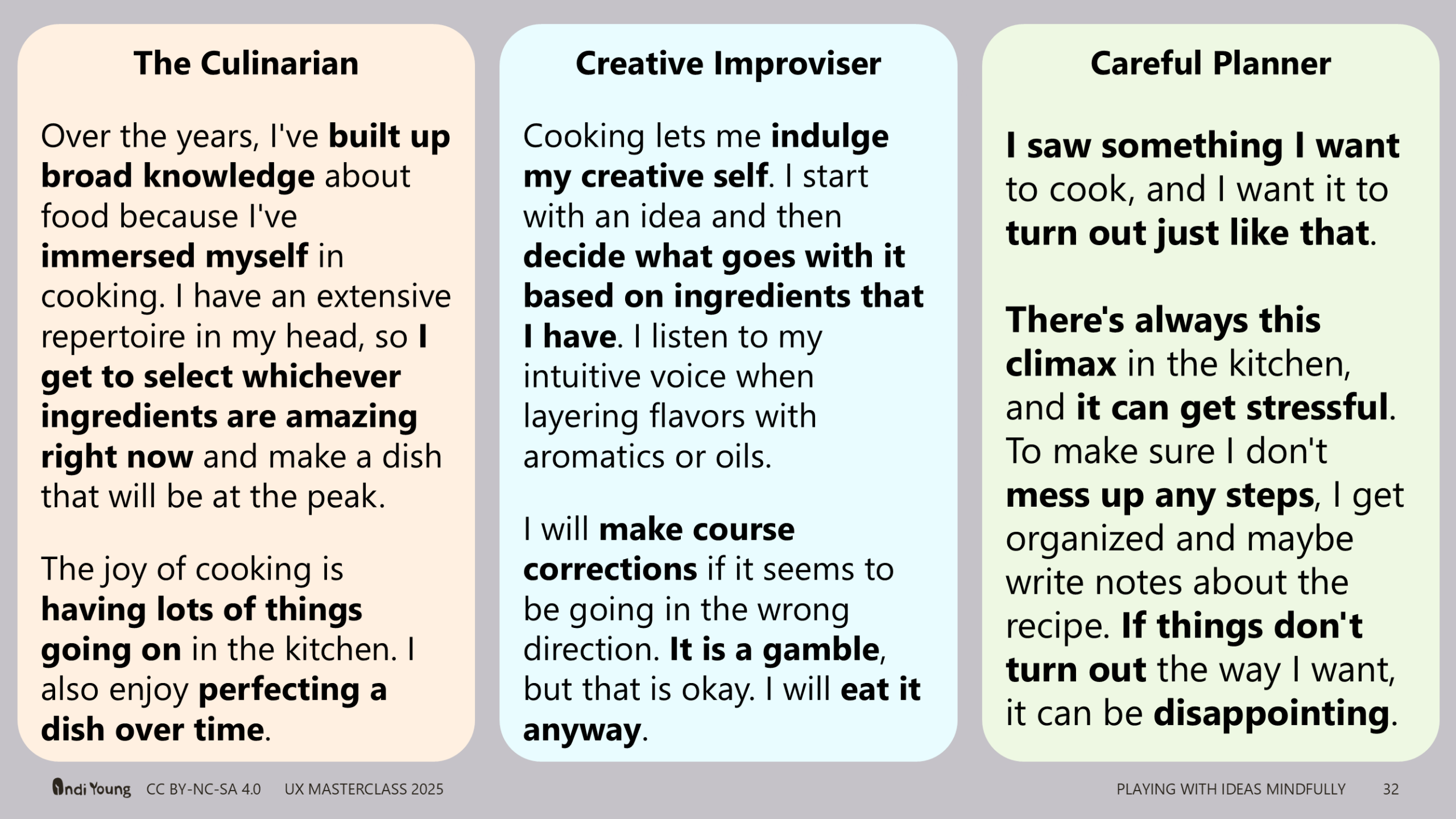
1.8 What Do They Look Like?
1.9 Thinking Styles Change
Section 2 – Represent Your People (Representative Collaboration)
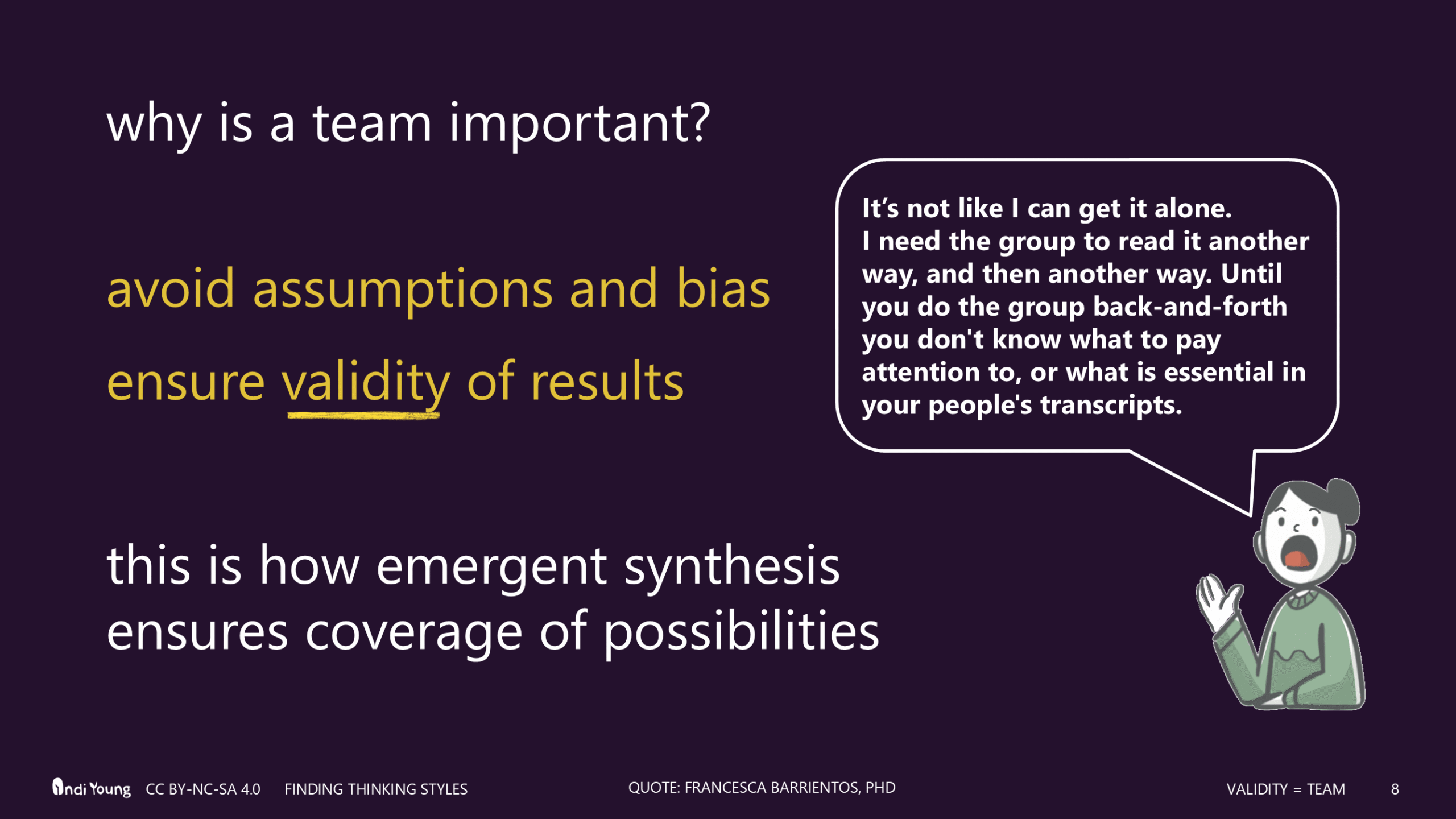
2.1 Validity = Team
2.2 Represent Your People
2.3 Split Stories or Not?
2.4 Note the Essential Cognition
Section 3: Find Similar Essential Cognition
3.1 How This Works
3.2 Play Your Cards
3.3 The First Pancake
3.4 Coherence of Groups
3.5 After the First Pancake
3.6 Too Much Cognition? (solving coherence issues)
3.7 Play Cards Across Contexts (solving coherence issues)
3.8 Not Enough Cognition? (solving coherence issues)
3.9 What to Do With Singles? (solving coherence issues)
3.10 Tipping Toward Preferences? (solving coherence issues_
3.11 How to Tell When Finished
3.12 The Last Iteration

Section 4: Descriptions & Labels
4.1 Describe Each Thinking Style
4.2 Label Each Thinking Style
4.3 Check Your Work
4.4 What We Changed
4.5 Compare to Existing Segments
4.6 Create Artefacts
Section 5: How Orgs Can Use Thinking Styles
5.1 Elevate Complexity & Variety
5.2 Measure & Track Outcomes
5.4 Collaborate Across Silos
5.5 Create Reverent Ideas

Who is this for?
People who will find the thinking styles for the organization to support.
If you have worked with personas, get in here. Thinking styles are very different, more statistically valid, and enable more mindful idea generation. This is how you create truly new innovations.
If you will be using thinking styles, check out the overview Working With mmSkylines & Thinking Styles.
Extra benefit: This is how you show the organization what it means to stop judging or ignoring people.
Study this course if you are tasked with finding thinking styles within one purpose.
- Researcher, Quant, Qual, Mixed Methods
- Software Engineer, Product Engineer
- Marketing
Study all but Section 3 to learn how to shift your mindset into supporting someone instead of trying to change them:
- Product Lead, Design Lead, Content Lead
- Design Strategist
- Entrepreneur, Founder
- Ideas Person
Course Features
- 33 videos, in 5 sections
- Total video time: 11.00 hours
- Demos and examples
- Practice, reflections & quizzes
- Closed captions
- Listen w/ or w/out the screen
Price levels – Finding Thinking Styles
Click here to compare courses for your role
Testimonials
If you build stuff that’s meant to help people get something done that they want to do but struggle to do, then you might’ve wondered, like me, whether or not people have their own reasons for deciding on one path over another. And obviously they do. So the course and…
— Steven Dean, 27-Aug-2026
Read moreYou are an awesome educator and thought leader. I really appreciate your positive and supportive approach to everything you do. You never make someone feel inadequate for not knowing something. Which unfortunately isn’t something people of influence always do.
— Rachel, 8-Feb-2024
I had previously taken Indi’s Listening Deeply course and really enjoyed both her approach and the way she teaches, so I wanted to continue learning with her. Finding Thinking Styles has helped me look beyond people as user profiles and better understand how they think and why they can make…
— Fausto Camacho, 26-Aug-2026
Read moreIt would depend on how much experience they had. I think for me, (someone with academic training as well as a decade of experience) it was inspiring yet very challenging. The concepts are complex and the level of psychic energy required (deep empathy practice) is demanding. I wish I had…
— Aria, 17-Jun-2021
Read more
I would definitely recommend that they learn this exciting and innovative research method. The course introduced a very interesting and valuable research methodology, and we were able to explore the introductory concepts in depth.
For me, the most unique part of the course was its overall methodological structure. It was completely…— Csilla Herendy, 4-Aug-2026
Read moreIt gives you a good theoretical base of how to build thinking styles from research material
— anonymous, 7-Jun-2021
Frequently Asked Questions
Q: If I have questions about the course content, will Indi answer them for me?
A: Asking a question in the Slack community will give Indi, her team, and many other Slack members a chance to see the question and respond to it.
Q: Do the recordings qualify me for Indi’s Problem Space Certification Program?
A: Not quite. You will also want to join the Live Practice series for each course. In these Live Practice meetings, you get to work on exercises together with Indi and others. This is where we discuss nuances of context and share experiences that help others prepare to conduct their own research. Live Practice meetings give you a chance to double your knowledge and demonstrate your understanding.