
Finding Thinking Styles
In Finding Thinking Styles, you’ll learn a reliable, repeatable process for grouping people by how they think, not by shallow demographics, behaviors, or statistics. You’ll learn how to discover the thinking styles that exist within the boundaries of goals that your organization helps people accomplish. This course follows an in-depth example that explores all the angles that your team might encounter when doing this work yourselves.
You do NOT need to be a researcher for this course, but you do need the mindset of team work and dwelling in details.
Required
before you take this course:
Self-paced Course Listening Deeply
-or- Book Time to Listen
see if you are ready

Self-paced course

Closed captions

Last updated March 2026

Join Indi’s Slack community

6 month access
About the course
Indi Young, creator of Data Science that Listens, teaches tried-and-true methods for guiding organizational and product strategy based on a nuanced understanding of the people you support (or want to start supporting). Eliminate the guesswork and leave your assumptions at the door. This is the strategic gateway into truly human products, services, and policies.
The biggest paradigm-shift is that you work within a goal/purpose that people share, instead of trying to describe people universally across a market population. This shift gives you deeply actionable understanding that leads teams to opportunities no one else is seeing.
Check out examples and uses of Thinking Styles.
Course Sections:
Section 1 – Why Thinking Styles
1.1 Think Bigger
1.2 Define Thinking Styles
1.3 The Choice to Support
1.4 How Many Thinking Styles?
1.5 Why No Demographics?
1.6 Compare to Other Segmentation
1.7 Compare to Roles
1.8 What Do They Look Like?
1.9 Thinking Styles Change
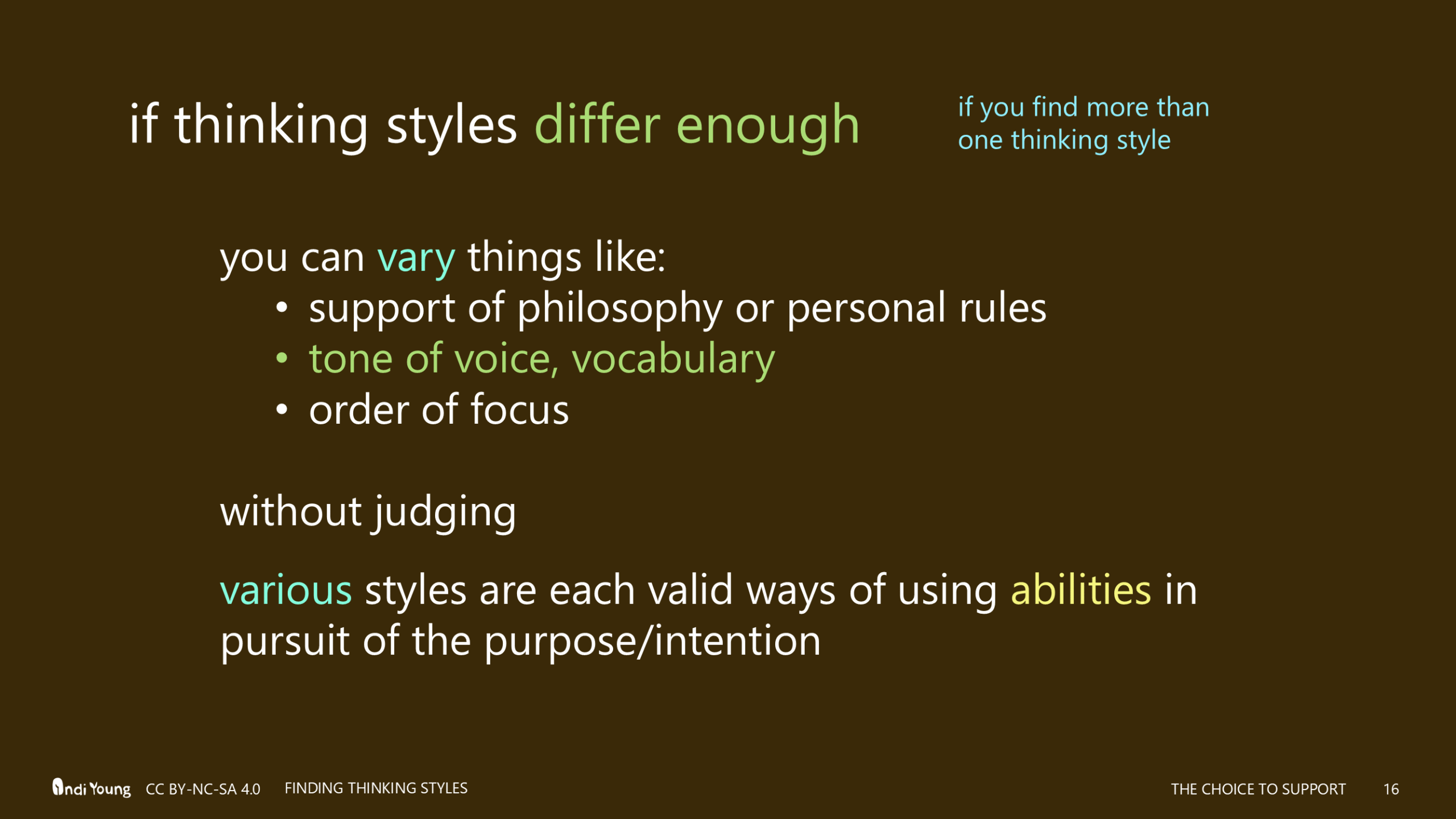
Section 2 – Represent Your People (Representative Collaboration)
2.1 Validity = Team
2.2 Represent Your People
2.3 Split Stories or Not?
2.4 Note the Essential Cognition
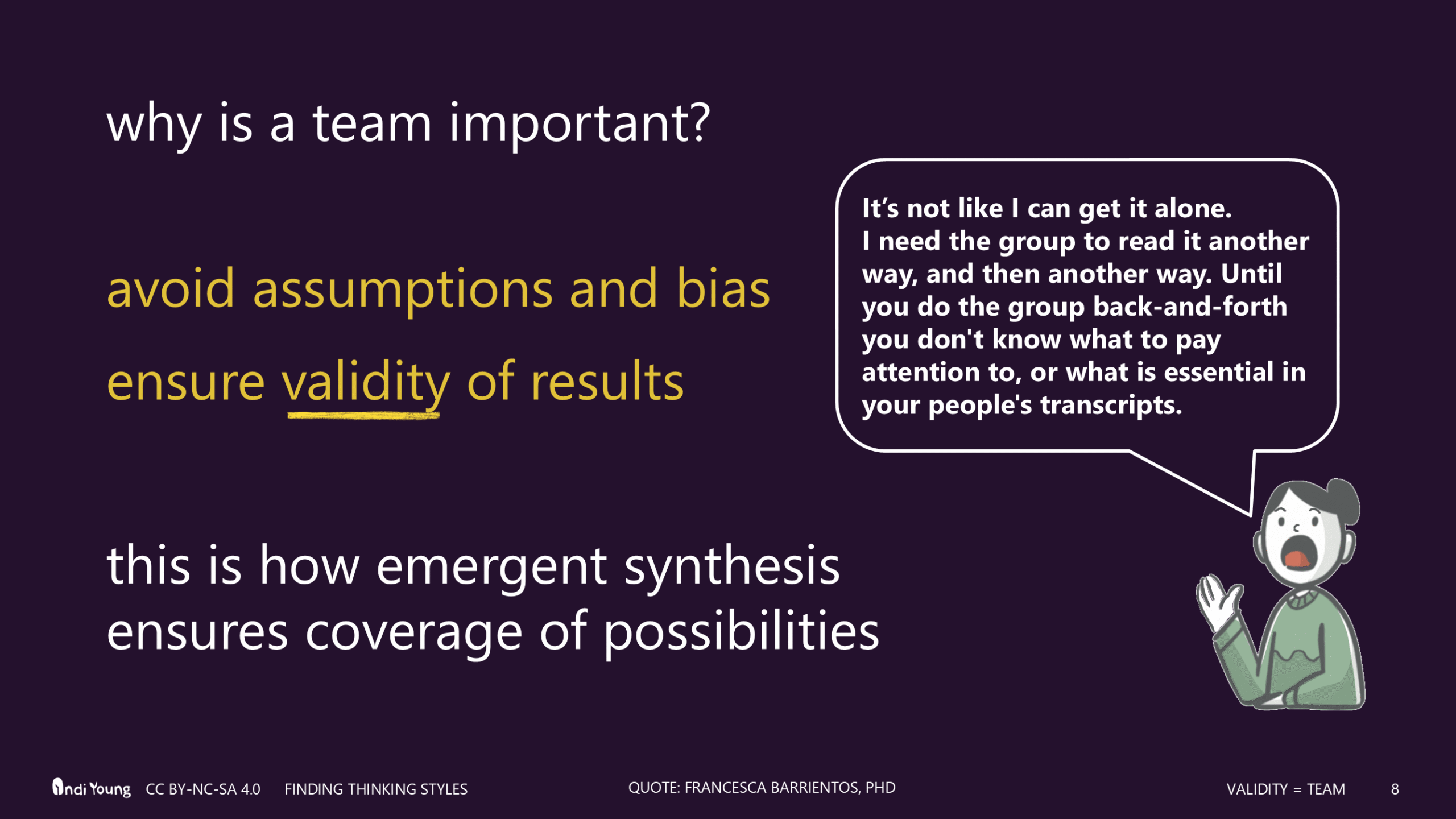
Section 3: Find Similar Essential Cognition
3.1 How This Works
3.2 Play Your Cards
3.3 The First Pancake
3.4 Coherence of Groups
3.5 After the First Pancake
3.6 Too Much Cognition? (solving coherence issues)
3.7 Play Cards Across Contexts (solving coherence issues)
3.8 Not Enough Cognition? (solving coherence issues)
3.9 What to Do With Singles? (solving coherence issues)
3.10 Preferences Instead of Cognition? (solving coherence issues_
3.11 How to Tell When Finished

Section 4: Descriptions & Labels
4.1 Describe the Thinking Style
4.2 Label the Thinking Style
4.3 Compare to Existing Segments
4.4 Check Your Work
4.5 Try Again If Needed
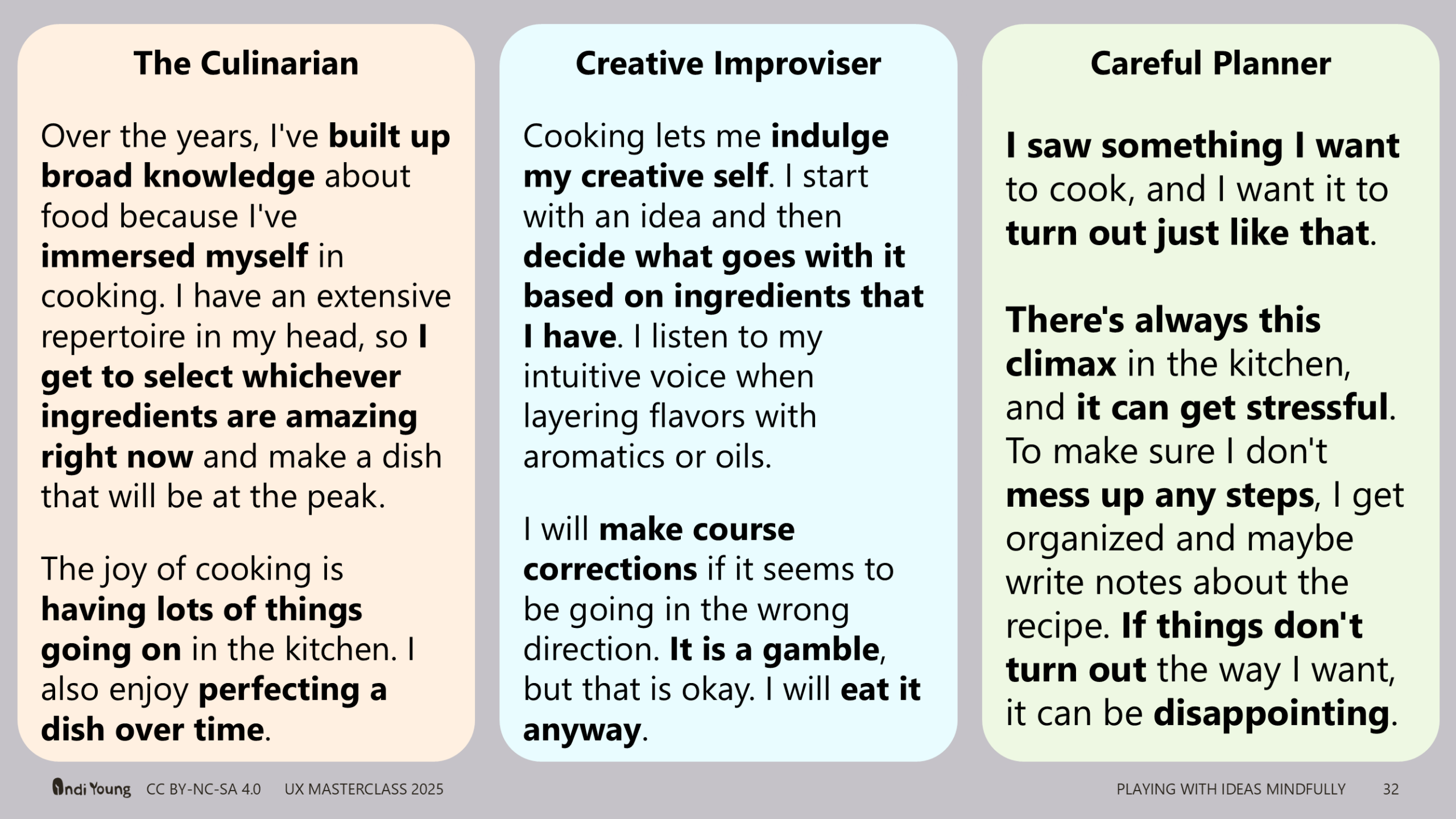
Section 5: Value and Uses
5.1 Value to Decision-Makers (strategic)
5.2 How Are Thinking Styles Used?
5.3 No Classification System Needed (Yet)

Who is this for?
People who will find the thinking styles for the organization to support.
If you have worked with personas, get in here. Thinking styles are very different, more statistically valid, and enable more mindful idea generation. This is how you create truly new innovations.
If you will be using thinking styles, check out the overview Working With mmSkylines & Thinking Styles.
Extra benefit: This is how you show the organization what it means to stop judging or ignoring people.
Study this course if you are tasked with finding thinking styles within one purpose.
- Researcher, Quant, Qual, Mixed Methods
- Software Engineer, Product Engineer
- Marketing
Study all but Section 3 to learn how to shift your mindset into supporting someone instead of trying to change them:
- Product Lead, Design Lead, Content Lead
- Design Strategist
- Entrepreneur, Founder
- Ideas Person
Course Features
- <to be updated>
- 46 videos, in 5 sections
- Total video time: 11.25 hours
- Demos and examples
- Practice, reflections & quizzes
- Closed captions
- Listen w/ or w/out the screen

Price levels – Finding Thinking Styles
Click here to compare courses for your role
Testimonials
The give-and-take gave me the impression that I was part of something that’s still evolving, which is exciting. Those of us applying problem space research to our work are part of the evolution. Each engaged student becomes part of how this fluid process is taught, and how it may be…
— Cindy Lowrey, 15-May-2019
Read moreThe training is a great way to expand how you conduct user research. Indi teaches you how to conduct your studies and analyze your data so that you’re getting to the heart of the users’ problems and better understanding their needs. I hadn’t realized how much rich data I’ve been…
— anonymous, 28-May-2019
Read more
Do it! You learn so much in just a few weeks. And though it’s online, it’s very interactive and personal, not at all like a webinar. And there’s homework that Indi actually checks!
— Francesca, 15-May-2019
It’s a better way to look at the people you want to design for, based on real and not made up data.
— Bibiana, 10-Apr-2020
It was great to work with Indi. She is a pioneer in the field of qualitative studies. She also came from a developer background which is useful when you are involved in software projects.
— Dana Lynn, 16-May-2019
Just do it.
— Yannis Masouras, 2-Jun-2021
Frequently Asked Questions
Q: If I have questions about the course content, will Indi answer them for me?
A: Asking a question in the Slack community will give Indi, her team, and many other Slack members a chance to see the question and respond to it.
Q: Do the recordings qualify me for Indi’s Problem Space Certification Program?
A: Not quite. You will also want to join the Live Practice series for each course. In these Live Practice meetings, you get to work on exercises together with Indi and others. This is where we discuss nuances of context and share experiences that help others prepare to conduct their own research. Live Practice meetings give you a chance to double your knowledge and demonstrate your understanding.